Moving to Back Bay Boston With a Dog: The BarkBay Guide
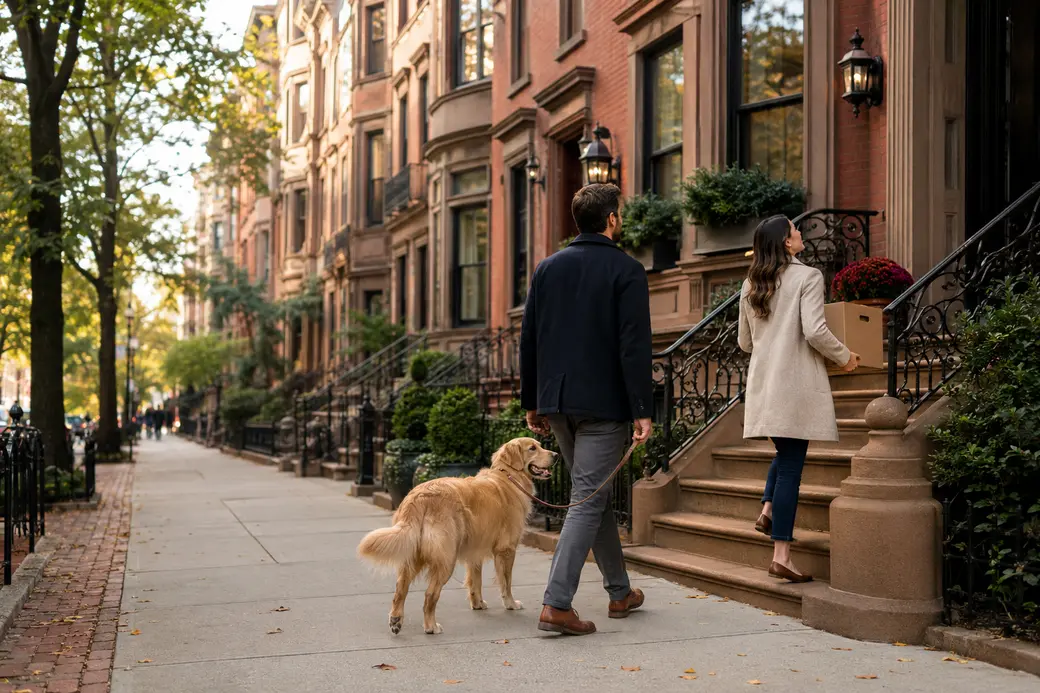
A practical relocation guide for dog owners comparing Back Bay brownstones, condos, pet policies, outdoor access, walkability, and everyday city routines.
Moving to Boston with a dog changes the questions you ask about a neighborhood.
You are not simply comparing square footage, finishes, commute times, or bedroom counts.
You may also be wondering:
Where will we walk every morning?
Does the building actually allow my dog?
How many flights of stairs will we use several times a day?
Is there easy street access?
Where will leashes, towels, and wet-weather gear go?
Will this home still work if my dog gets older?
For professionals, couples, and families relocating to Boston, these everyday details can have a major impact on whether a home truly feels right.
Welcome to BarkBay, Boston Brownstones Realty’s look at Back Bay living through the perspective of dog owners and the people we affectionately call PawRents.
According to Annie Youssoufian, Broker/Owner of Boston Brownstones Realty, PLLC, buyers relocating to Boston often benefit from looking beyond the listing itself and thinking carefully about how a property, building, block, and neighborhood will support their actual routine.
For dog owners, that process can be especially important.
Why Moving to Back Bay With a Dog Requires a Different Search Strategy
Back Bay is one of Boston’s most recognizable residential neighborhoods, but not every home within it offers the same day-to-day experience.
A historic brownstone residence may offer direct street access and architectural character.
Another may require several flights of stairs.
A luxury condominium building may provide elevator access and convenient amenities.
Another may have pet rules that do not fit a buyer’s needs.
Two homes located only a few blocks apart can create very different routines for someone walking a dog multiple times a day.
That is why relocating dog owners should evaluate more than whether a listing simply says “pets allowed.”
The better question is:
How will living here actually work?
Step 1: Understand Pet Policies Before Falling in Love With a Home
One of the first things dog owners should understand when moving to Back Bay is that pet policies can vary from one property or condominium association to another.
Depending on the building, rules may address issues such as:
- Whether dogs are permitted
- The number of pets allowed
- Size or weight limitations
- Other building-specific restrictions
- Use of common areas
- Move-in procedures
- Expectations for residents with pets
The exact rules should be reviewed for the specific property under consideration.
This is particularly important in a neighborhood where buyers may be comparing very different housing types, from historic brownstone condominiums to larger residential buildings.
A beautifully renovated home can still be the wrong fit if the applicable rules do not support the buyer’s household.
BarkBay Tip
Ask about pet policies early, not after emotionally committing to the property.
For relocating buyers working with limited time, that can help prevent wasted showings and narrow the search toward homes that deserve serious consideration.
Step 2: Decide How Much Street Access Matters
For many dog owners, the trip from the front door to the sidewalk becomes one of the most repeated parts of daily life.
That makes access surprisingly important.
When comparing Back Bay homes, consider:
- Is the residence at garden level?
- Is it on a parlor level?
- How many stairs are involved?
- Is there an elevator?
- Does the elevator open conveniently near the residence?
- Is there direct exterior access?
- What does the route outside feel like several times a day?
A fourth-floor walk-up may feel manageable during a showing.
But imagine that routine:
Before work.
Late at night.
During rain.
With groceries.
With a senior dog.
With an injured dog.
With children or a stroller.
The right answer will be different for every buyer, but the question deserves serious attention.
Step 3: Compare Back Bay Brownstones Based on Daily Life
For many people moving to Boston, owning or living in a Back Bay brownstone is part of the dream.
The architecture, historic character, tree-lined streets, and distinctive residential experience are difficult to replicate.
But dog owners should look beyond the façade.
When evaluating a brownstone in Back Bay Boston, consider how the individual residence functions.
Useful questions include:
- How many stairs are part of the daily routine?
- Is there direct street access?
- Is private outdoor space available?
- Is there a practical entry area?
- Where will leashes and outdoor gear be stored?
- How quickly can you reach your preferred walking route?
- Is the floor plan flexible enough for your household?
- What pet rules apply to the condominium?
One Back Bay brownstone may be an exceptional fit for a dog owner.
Another may not be.
The property-specific details matter.
Step 4: Think Carefully About Elevator Buildings
For some relocating dog owners, elevator access can become a major priority.
An elevator may be especially helpful for:
- Senior dogs
- Large dogs
- Dogs recovering from injury
- Owners planning for long-term accessibility
- Families with young children
- Households regularly carrying groceries, gear, or strollers
But an elevator alone does not automatically make a building ideal.
Buyers should still consider:
- The building’s pet policy
- The route from the residence to the exterior
- Common-area rules
- The surrounding block
- Nearby walking options
- The overall functionality of the layout
Luxury is not simply having more amenities.
It is having the amenities that make your own life easier.
Step 5: Walk the Neighborhood Like You Already Live There
This may be one of the most important pieces of advice for anyone moving to Back Bay with a dog:
Do not evaluate the neighborhood only from inside the property.
After a showing, walk outside.
Imagine the real routine.
Where would you go at 7:00 in the morning?
What route would you take before work?
How does the block feel in the evening?
Where would you walk on a longer weekend outing?
How convenient are everyday errands?
For dog owners, neighborhood fit is often experienced one block at a time.
A home’s exact location within Back Bay can influence how easily a household reaches places such as:
- The Charles River Esplanade
- Commonwealth Avenue Mall
- Preferred neighborhood streets
- Coffee shops
- Grocery stores
- Transportation
- Pet-related services
- Everyday errands
The goal is not simply to prove that something exists nearby.
The goal is to understand whether the location supports your actual routine.
Step 6: Think About the Charles River Esplanade as Part of the Lifestyle
For many Back Bay residents, proximity to the Charles River is one of the neighborhood’s defining lifestyle advantages.
For dog owners, nearby outdoor routes can become part of everyday life.
Morning walks before work.
Longer weekend outings.
Time outside after a day spent indoors.
A change of scenery without leaving the city.
When relocating, however, it is worth thinking specifically about how often you expect to use that access.
A buyer who imagines daily walks near the river may place a different value on location than someone who expects shorter neighborhood loops most days.
This is where a map can only tell you so much.
Experience the route yourself.
Walk it from the prospective home.
Step 7: Plan for Boston Weather, Not Just Perfect Showing Days
Relocation searches often happen during a short visit.
And sometimes the weather cooperates a little too well.
A sunny afternoon can make almost any neighborhood routine feel easy.
Dog owners should also imagine:
- Rain
- Snow
- Slush
- Cold mornings
- Hot summer afternoons
- Wet paws
- Muddy gear
- Dark winter evenings
This can change how you evaluate a property.
A practical entry area may become more valuable.
Direct street access may matter more.
An elevator may feel different.
Storage near the door can suddenly seem luxurious.
A property should not only work on the best day of the year.
It should work during ordinary Boston life.
Step 8: Consider the Dog You Have Today — and the Dog You May Have Later
One of the easiest mistakes during a home search is evaluating everything around the present moment.
A young dog may handle stairs easily.
An older dog may not.
A small dog and a large dog can create different space requirements.
A household planning to add another pet may evaluate building policies differently.
When relocating to Back Bay, consider the longer-term picture:
- How old is your dog?
- How active is your dog?
- Is stair access likely to remain practical?
- Could mobility become an issue?
- Might you add another dog?
- Will your household grow?
- Will the floor plan continue to work?
A good real estate decision should support more than the first few months after closing.
Step 9: Think About the Move Itself
Choosing the home is only part of relocating with a dog.
The transition matters too.
Before moving day, consider:
- Building move-in procedures
- Elevator reservations
- Loading access
- Where the dog will stay during the move
- Whether doors will frequently be open
- How quickly you can establish a walking routine
- Where food, medication, leashes, and records will be kept
- Whether veterinary and pet-care needs should be arranged in advance
Moving day can be stressful for people.
For dogs, a completely new environment filled with unfamiliar sounds, smells, people, and activity can be even more confusing.
Planning ahead can make the first few days easier.
What Should Relocating Dog Owners Prioritize in a Back Bay Home?
Every household is different, but buyers may want to compare properties based on several practical features.
Direct Street Access
Especially valuable for owners who expect frequent outdoor trips or prefer fewer shared common areas.
Elevator Access
Potentially important for long-term convenience, larger dogs, aging pets, and accessibility.
Private Outdoor Space
A patio, terrace, deck, or other usable area may influence how a home functions, though buyers should still understand applicable property and condominium rules.
A Practical Entry Area
Space for leashes, towels, boots, bags, and wet-weather gear can make everyday routines easier.
Flexible Interior Space
An alcove, den, wider living area, or adaptable layout may help accommodate a dog bed, crate, home office, or changing household needs.
Nearby Walking Routes
The distance to a preferred route may become more meaningful when repeated every day.
Appropriate Pet Policies
The building must work for the actual household, not an imaginary future buyer.
Renting First or Buying Right Away?
People relocating to Boston sometimes wonder whether they should rent first or purchase immediately.
There is no universal answer.
The right decision can depend on:
- How well the buyer knows Boston
- Expected length of stay
- Financial goals
- Timing
- Available inventory
- Familiarity with different neighborhoods
- Confidence in long-term lifestyle needs
For dog owners, there is another consideration:
Do you already understand the routine you want?
Someone who has spent significant time in Back Bay may already know which streets and locations feel right.
A first-time Boston resident may benefit from thinking carefully about how commute, outdoor access, housing type, and everyday habits fit together.
The goal should not be to rush into a generic idea of “Boston living.”
It should be to choose a home that supports the life you actually expect to build.
Is Back Bay a Good Fit for Families With Dogs?
Back Bay can appeal to households at many different life stages.
Professionals may value access to the city.
Couples may prioritize walkability and neighborhood amenities.
Families may focus on space, routine, transportation, and long-term flexibility.
Dog owners may layer in additional questions about access, pet policies, and outdoor routes.
For a family with a dog, the home search may involve balancing all of these considerations at once.
That makes property-specific guidance especially important.
A neighborhood can look perfect on paper while one building, one staircase, or one set of condominium rules changes the equation.
Frequently Asked Questions About Moving to Back Bay With a Dog
Is Back Bay a good place to live with a dog?
Back Bay can be appealing to dog owners who value walkable city living and access to established outdoor routes. The best fit depends on the specific home, building policies, location within the neighborhood, and the needs of the individual dog and household.
Are dogs allowed in Back Bay condos?
Some Back Bay condominiums allow dogs, while others may have different restrictions or policies. Buyers should review the rules and documents that apply to the specific property rather than assuming all buildings follow the same standards.
What should I look for when moving to Back Bay with a dog?
Important considerations may include pet policies, stairs, elevator access, direct street access, private outdoor space, practical entry storage, nearby walking routes, and whether the home will continue to fit the household long term.
Are Back Bay brownstones good for dog owners?
Some Back Bay brownstone residences can work exceptionally well for dog owners, particularly when they offer convenient exterior access, usable outdoor space, or a practical layout. Others may involve multiple flights of stairs or building rules that deserve closer review.
Should I prioritize proximity to the Charles River Esplanade?
That depends on your routine. Buyers who expect longer daily walks or frequent outdoor time may place greater value on convenient access, while others may prioritize different parts of Back Bay. Walking the route from a prospective home can help determine how meaningful the location is for you.
Welcome to BarkBay
Moving to Back Bay with a dog is about more than finding a pet-friendly listing.
It is about understanding how a home will function.
How the building works.
How the block feels.
Where the morning walk happens.
How many stairs stand between the sofa and the sidewalk.
Whether the property fits both the life you have today and the one you are building next.
That is the idea behind BarkBay.
A closer look at Back Bay living through the routines, decisions, and everyday experiences that make a neighborhood feel like home.
For buyers relocating to Boston, Annie Youssoufian of Boston Brownstones Realty, PLLC provides personalized guidance focused on Back Bay real estate, historic brownstones, condominium living, neighborhood differences, and the property details that shape a successful move.
Considering a move to Back Bay Boston? Connect with Annie Youssoufian and Boston Brownstones Realty, PLLC to discuss your relocation goals and begin building a home search around the way you actually want to live.
Categories
Recent Posts